Next live session24 — 26 November 2026 — limited seatsReserve
Field Notes July 2026 9 min read

I made a guest cry on a private jet.

After the last post someone made a fair point: operations matters, but the client never actually sees it. What they see is the service — the front face of the company. That's true, and it deserves a real answer.

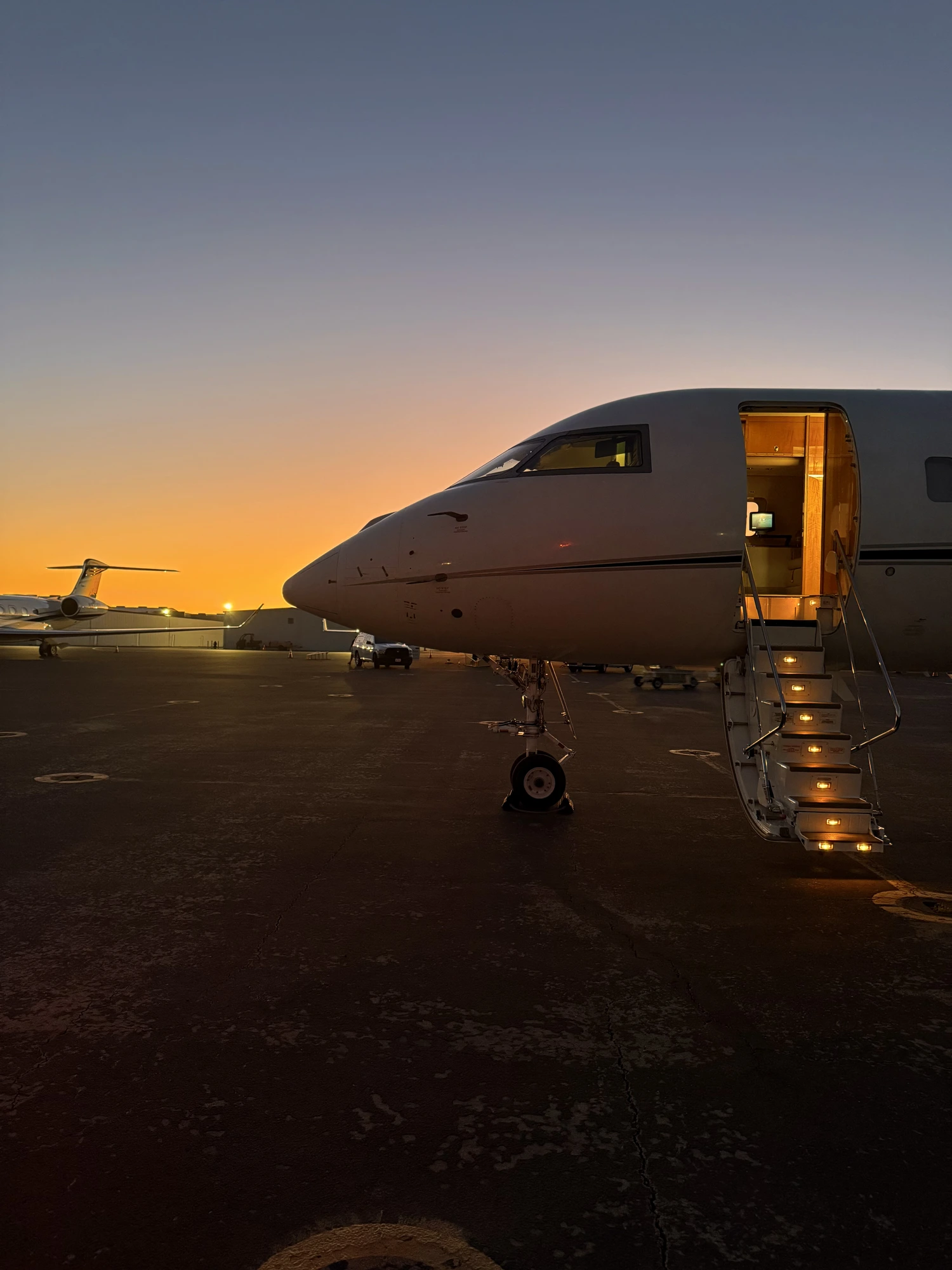
Private jet at sunset on the ramp, cabin door open with stair lights on.
Where the room to be memorable begins — before the guest boards.

After the last post — "OK Stop. Private aviation isn't about service. It's about operations." — someone made a fair point: operations matters, but the client never actually sees it. What they see is the service, the front face of the company. That's true, and it deserves a real answer, not a rebuttal.

Someone else put a word on what that service actually runs on: anticipation. It threads through every part of this job — cabin crew, flight operations, FBOs, maintenance, dispatch. You either know a client's expectations, preferences, and rhythm by now, or you're guessing and calling it service.

Here's how those two ideas fit together, because they're not actually in tension. Without a menu built ahead of time, without a catering order actually placed, there's nothing to serve, let alone anticipate. In commercial aviation, the service flow is designed for you, by a Cabin Experience department made up of ex-crew, current crew, hospitality and aviation professionals. You personalize at the margins. In private aviation, that structure disappears — and so does the ceiling on what you can actually anticipate and create. That's not a smaller job. It's a bigger one, with less to hide behind.

The four ideas

The room, the money, and the two kinds of memorable.

Idea

The "experience" card

When you join an operator, you're handed a credit card. Not unlimited, but LARGE enough to mark points: a budget per guest, usually somewhere between €450 and €600, depending on the aircraft type and the length of the rotation. For the guests who matter most to the operator's business, that number stops being a budget in the accounting sense. It becomes a door. What you do with it is how you're remembered.

It's worth asking why an operator hands that door to someone they've often known for a few weeks. The answer isn't generosity. A client who feels genuinely looked after doesn't just rebook — they refer. Their world is smaller than it looks from the outside, and word about a crew that gets it right, or gets it wrong, travels fast inside it. The budget isn't a gift. It's the cheapest insurance the operator has against losing a relationship worth vastly more than what's spent protecting it.

If the practical side of this interests you — how you actually place a catering order, which platforms operators use, how sourcing works day to day, how to create an emotional connection with your guest — that's exactly the kind of detail we walk through. Book a discovery call to learn more about our 3-day live online training →

The card in your hand isn't a constraint you're fighting against. It's room the company has already decided is worth giving you.

Idea

The catering budget is ~2% of yearly operating costs

Put that number next to what the aircraft actually costs to operate for the day: fuel, crew, maintenance, positioning — and it looks small immediately. At some operators, the entire catering and experience budget represents around 2% of yearly operating costs. Two percent, against everything else that keeps the aircraft flying, and against a client relationship that took years to build.

That changes the question. It's not "how do I stay under budget." It's "what do I actually do with the room I've been given."

And with that room comes a responsibility most candidates don't think about: spending it well isn't the same as spending it fully. A budget used carelessly, on things nobody wanted, isn't generous — it's wasteful. A budget used precisely, on the one thing a guest actually cares about, is the entire job. It matters even more when you're flying for an owner directly, not an operator's rotating client list. That card is his money, not a company line item. Would he be happy seeing how you spent it? If the honest answer is no, you already know what to fix.

Spending it well isn't the same as spending it fully.

Idea

There are two kinds of memorable

The first is the crisis kind. A director of aviation who commented on the last post described it better than I could: the principal calls from the Bahamas, a baby onboard who needs to get home to Boston, and the airspace is closed. You make it happen. No fanfare, no drama, just a lot of different solutions and coordination, run with a calm, steady hand, so it comes off safely, conveniently, and seemingly effortlessly. This is the version people picture: the save, the fix, the story you'd tell at dinner.

The second kind is the one you get to build in advance, when the information arrives ahead of the flight instead of in the middle of a crisis. It happened to me directly. A guest's assistant mentioned, before a flight, that he was a serious James Bond fan. That was the whole brief — one passing comment. But it was enough lead time to do something with it properly: we built the flight around the films. Goldfinger woven into the cabin, lines pulled straight from the movies, a themed menu, the score playing as he boarded, a full atmosphere built around a world he genuinely loved.

It wasn't just memorable. It was emotional. It was close to his own dream, realized at altitude. He cried.

Nobody hands you a brief for that. Nobody tells you how loud to play the music or which line to use. You're given one sentence from an assistant and a budget that was never really the limit — and what you build from it is entirely yours.

Two very different flights, same root cause: paying attention to something someone told you, and having the room, and the nerve, to actually do something with it.

Idea

Operations gets you the room. Service is what you do inside it.

The memorable part isn't the size of the gesture. It's whether it came from genuinely listening, or from a laminated list of what private aviation is supposed to look like.

At Gate 33, we don't really teach you service. If you're reading this, you probably already have it. What we build is the operational readiness to face moments like these — the crisis and the dream alike — without a script and without anyone handing you a brief.

Operations gets you the room to do this. Service is what you do inside it.

The turning point

Three days, live online, built around exactly this.

Gate 33 exists to give you the operational readiness to walk into these moments prepared — the crisis, the pre-flight briefing that becomes a dream, the guest who feels genuinely looked after. Three consecutive live online days with your trainer. Fourteen modules delivered live. €600 or up to 24× payments with PayPal.

The service, you already have. What we build around it is the rest.

The 3-Day Online Training

Ready to build the operational side?

Three live online days with Nicolas. Learn the real operator standards behind every memorable flight — catering sourcing, budget precision, cabin building, the anticipation layer nobody teaches you until you're already in the seat.

See the 3-Day Online Training

€600 or up to 24× payments with PayPal · Next live session: 24 — 26 November 2026

Newsletter

Get operator news, cohort dates & career insights.

Sent by Nicolas. Low frequency, no spam — unsubscribe anytime.

Free · 15 minutes · Manually reviewed

Where does your profile actually sit today?

Twelve real-world scenarios plus three operator cases — reviewed personally by Nicolas. Written feedback on where you already stand and what still needs work before the next application.

Take the Free Readiness Assessment
Need advice?

Should you need advice from us, please feel free to reach out.

Book a Free Discovery Call