Next live session24 — 26 November 2026 — limited seatsReserve
Field Notes July 2026 10 min read

OK. Stop. Private aviation isn't about service. It's about operations.

I've bought caviar for a guest exactly once, across roughly 100 flights and close to 300 guests this year. That's the gap between what most candidates imagine private aviation service looks like, and what it actually is.

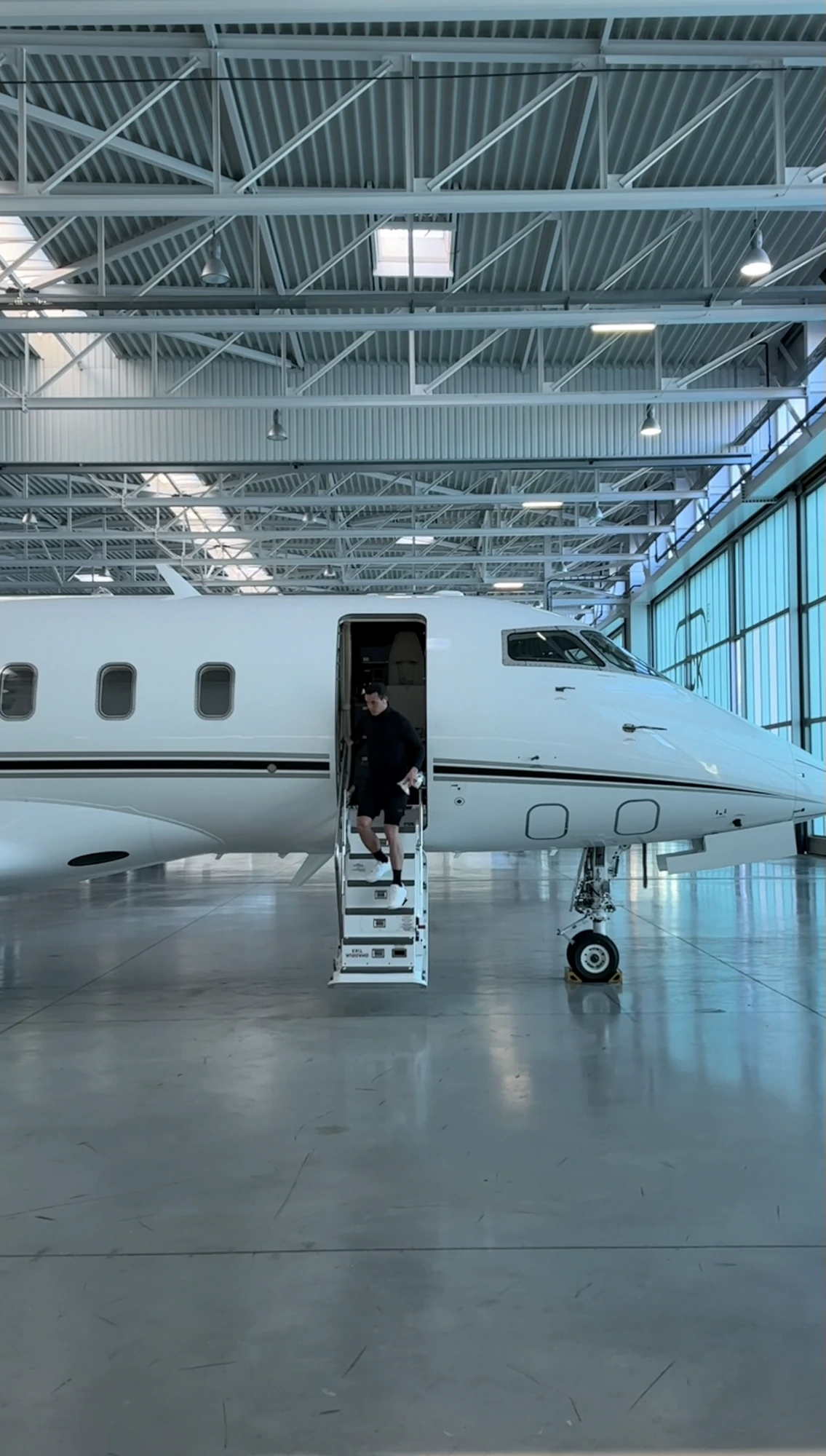
Nicolas Perot dos Santos stepping out of an ultra-long-range private jet inside a hangar — the operational reality of business aviation.
The other 80% of the job — before a single guest boards.

I've bought caviar for a guest exactly once, across roughly 100 flights and close to 300 guests this year. The same guest didn't touch it the second time either.

That's the gap between what most candidates imagine private aviation service looks like, and what it actually is. Caviar, foie gras, Balik salmon on every flight: that's the fantasy. The reality is a lot of 50-minute flights where nobody has time for a five-course tasting menu, and guests who mostly want something simple, done well. Less is more, almost every time.

The six realities

Here's what the job actually looks like — from the other side of the cabin door.

Reality

The caviar fantasy vs the reality

Caviar, foie gras, Balik salmon on every flight: that's the fantasy sold online. Reality is a lot of 50-minute flights where nobody has time for a tasting menu, and guests who mostly want something simple, done well.

Less is more, almost every time. That guest I bought caviar for? Didn't touch it the second time either.

Stop training for the demo reel. Train for the flight schedule.

Reality

Reading the cabin, not the menu

A lot of wealthy passengers are careful with money in ways that surprise people. On more than one flight, guests have shown up with their own food — cookies, bagels, a fruit platter, brought onboard for a night flight.

Even then, when the broker says the guests are handling their own catering, the cabin still can't show up with nothing on board. Reading the flight brief matters more than reading a menu. If the guests are bringing cookies and bagels, they're not there for caviar. The right call is a supermarket run, or a handful of pizzas from the nearest pizzeria, and elevating the experience somewhere else entirely: a relaxing moment mid-flight, face masks, a bit of self-care in the cabin.

Reading the cabin is the actual skill. Not the menu.

Reality

Service is maybe 20% of the job

This is the real reason so many strong commercial candidates struggle to make this transition. Service is maybe 20% of the job. The other 80% happens before a single guest boards.

Sourcing catering from scratch. Building a menu around one person's preferences. Managing stock across a multi-day rotation. Coordinating directly with FBOs and suppliers. Cabin presentation, safety, budget.

In commercial aviation, you execute a service someone else designed, with a crew around you and a procedure for everything. In private aviation, you are the operation. Alone. On a different aircraft, for a different client, every rotation.

I came from Qatar, five-star, and Etihad, four-star. Real experience by any measure. But service was the only thing there was to sell, because nobody explains how operational this job actually is until you're already in it. It took me 120 applications to figure that out.

Service still matters — but service isn't the codes. It's behavior and charisma. Plenty of strong commercial crew know every step of a five-star service sequence and still don't fully embody the role.

Reality

The spaghetti story — you're a fixer, not a server

A few weeks ago, the owner I fly for wanted something different from the menu I'd already prepared. Everything was already onboard. Then, just before disembarking, he asked, kindly, if I could get spaghetti all'arrabbiata and a tiramisu instead. There's only one real answer to that: "of course".

Once he left, I called the catering company I usually work with in Nice and asked them to take the order despite the short notice. They agreed, but not before 3:30pm. Then the owner called: he'd be at the aircraft in ninety minutes. It was 2pm. The order wasn't going to make it in time. So I took a taxi to the nearest Italian restaurant myself and came back with exactly what he'd asked for.

What do you think I'm paid for in a moment like that? Not service. You're handed a company card and you become a handler, a fixer, a problem solver. In Nice, that's manageable — it's where I live. The real question is what happens when you're somewhere you don't know at all, under the same deadline.

As a recruiter, that's exactly what I want to see before I hire someone: can you resolve this without a script, wherever you happen to be, under pressure.

Reality

Not every operator works the same way

To be fair, some operators — NetJets among them — have a dedicated department that handles catering logistics, so the crew isn't the one making these calls under pressure. That's a real distinction between operators, worth knowing before you sign anywhere.

But you don't get to choose which one interviews you first. And if you've only ever trained for the version where someone else handles it, you won't be ready for the version where you're the entire department.

Sourcing is only half of it. Knowing how to prepare catering onboard is a separate skill entirely, because no two galleys work the same way. Space, equipment, timing — all of it changes from one aircraft to the next. On a one-hour flight, there's no room to recover from a wrong step. Get that sequence wrong and the whole service can fall apart before it starts.

Train for the harder case. The easier one is a bonus, not a plan.

Reality

Beware the 20% lifestyle sellers

None of this means the food should be forgettable. I still build a proper menu — just not around caviar, foie gras, or Balik salmon, even on a long-haul flight. A good piece of meat, a signature dressing, a dish that's actually mine. That's what belongs on the tray.

Remember when first class actually felt exceptional? Airlines have quietly downgraded that experience for years, and first class is now more accessible than ever, on price and on miles. Something similar is happening in private aviation. The guest profile onboard has shifted, and so has the way people eat: gluten-free, vegan, and a dozen other restrictions show up far more often than any tasting menu does.

One more thing worth saying plainly: be careful taking career advice from every flight attendant selling the lifestyle online. Most of them are selling the 20%.

Bring your own creativity to the problem — not a memorized version of luxury that stopped being the point a while ago.

The turning point

What the job actually is, on paper

Here's what the job looks like for me today, flying ultra-long-range jets as sole cabin attendant for owner, corporate and charter operations: full responsibility for cabin prep and catering sourcing, budget management around €450 to €600 per guest, stock control across multi-sector rotations, direct coordination with FBOs and suppliers, post-flight reporting.

None of that shows up on the demo reel most candidates picture before they apply. All of it is the job.

Calling yourself resourceful reads well on a CV. It means nothing until it's tested. Private aviation hides more from candidates than they expect — right up until someone actually tests it.

The 20-minute honest test

Ready to see if you're operationally ready?

Gate 33 doesn't exist to teach you how to serve caviar or plate Balik salmon. That's yesterday's version of the job. We close the gap between what candidates imagine, and what operators actually hire for. If you don't know exactly where your gap is, don't guess.

Take the Operational Assessment

12 scenarios · 3 real-world cases · scored against operator expectations.

Newsletter

Get operator news, cohort dates & career insights.

Sent by Nicolas. Low frequency, no spam — unsubscribe anytime.

Free · 15 minutes · Manually reviewed

Where does your profile actually sit today?

Twelve real-world scenarios plus three operator cases — reviewed personally by Nicolas. Written feedback on where you already stand and what still needs work before the next application.

Take the Free Readiness Assessment
Need advice?

Should you need advice from us, please feel free to reach out.

Book a Free Discovery Call